Insight / May 07, 2026 / 3 min read
Why Realtime Fatigue Detection Still Fails in Real Roads
Inside the engineering challenges of building a low-latency realtime driver monitoring AI system using webcam-based computer vision, facial landmark tracking, and fatigue scoring pipelines.
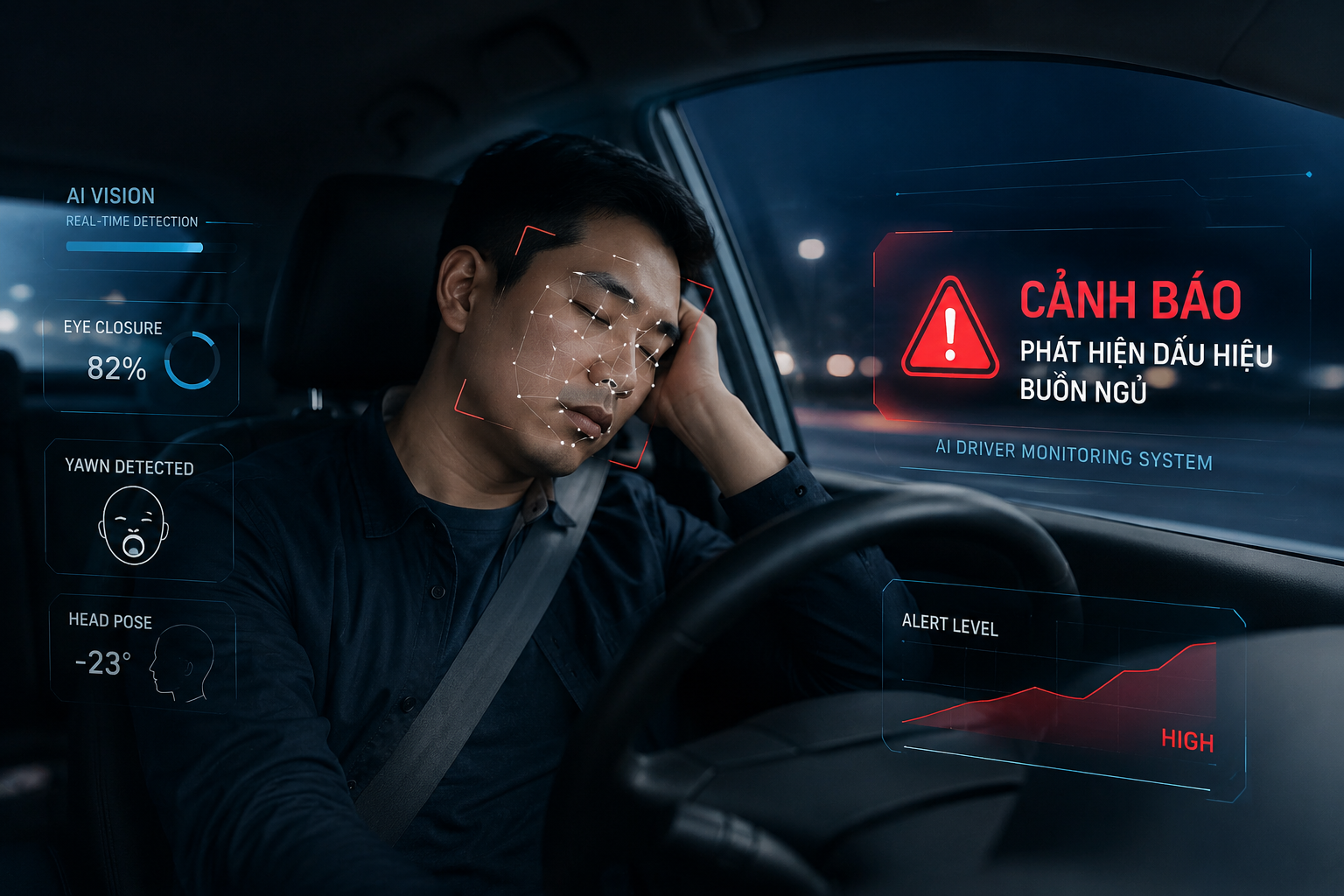
# Why Realtime Fatigue Detection Still Fails in Real Roads
Inside the challenges of building a low-latency driver monitoring AI system using webcam-based computer vision.
---
Introduction
Most driver fatigue detection demos work well in controlled environments.
Good lighting. Stable webcam. Front-facing driver.
But real roads are unpredictable.
Drivers constantly move their heads, lighting conditions change every second, and webcam quality varies heavily between devices. Glasses reflections, motion blur, nighttime noise, and unstable frame rates all introduce failure cases that many demo systems ignore.
The real challenge is not building a perfect AI demo.
The real challenge is building a realtime monitoring pipeline that still behaves reliably under imperfect conditions.
That is where many computer vision systems fail.
---
What I Built
The Driver Fatigue Detection AI project at LMT Systems was designed as a lightweight realtime monitoring system focused on practical inference rather than flashy visualization.
The system pipeline includes:
1. Webcam frame capture
2. Face detection
3. Facial landmark extraction
4. Eye region analysis
5. Eye Aspect Ratio calculation
6. Temporal fatigue scoring
7. Realtime alert triggering
The goal was to maintain stable detection while keeping latency low enough for realtime interaction.
---
Technical Stack
Core features:
---
Challenges During Development
### Lighting Variability
Lighting conditions dramatically affect facial landmark stability.
Bright sunlight, nighttime environments, and webcam auto-exposure shifts caused unstable predictions in early versions.
### Temporal Noise
Single-frame predictions are unreliable.
To reduce flickering between awake and fatigue states, temporal smoothing logic was added to stabilize predictions across multiple frames.
### Head Rotation
Small head rotations can distort eye geometry enough to break naive EAR-based calculations.
### Webcam Quality
Different webcams produce very different results depending on sensor quality and lighting.
---
Why Realtime AI Is Different
Realtime AI introduces engineering constraints that most offline AI demos never face:
A technically accurate model can still fail if the experience feels unstable.
Realtime AI is not only a machine learning problem.
It is also:
---
Lessons Learned
One important realization during development:
A simpler and more stable pipeline often performs better in realtime environments than an overcomplicated deep learning architecture.
Consistency matters more than flashy predictions.
---
Next Steps
Future improvements include:
The long-term goal is building practical realtime AI systems that can move from prototype to deployable products.
---
Final Thoughts
Realtime AI is easy to fake in demos.
Building systems that remain reliable in real-world environments is much harder.
That gap between prototype and deployment is where engineering truly matters.
Related Insights
No related insights published yet.